When designing an industrial facility, one of the most common questions I get from project managers is whether selecting water cooling than air cooling will truly lower their long-term operating costs. Making the wrong choice can lead to massive energy bills or unexpected downtime during seasonal temperature peaks. You need a refrigeration system that is highly reliable and matches your specific operational reality.
Under optimal ambient conditions, water cooling can provide significantly higher heat transfer efficiency than air cooling because water has a much higher specific heat capacity than air1. However, a water-cooled system is only more effective if your facility has access to reliable water, a properly sized cooling tower, and the resources to perform regular water-treatment maintenance.
To find the best option for your plant, we must look beyond basic compressor datasheets. Let us break down how these two cooling methods perform under real-world industrial conditions and how to calculate their true system-level costs.
Why is water cooling than air cooling often considered more efficient?
High electricity bills from running massive industrial chillers can severely eat into your manufacturing margins. If you feel like your cooling system is consuming too much power, understanding why engineers often prefer water cooling than air cooling is crucial.
Water cooling is thermodynamically superior because it rejects heat to the wet-bulb temperature of the ambient air using evaporation, which is always lower than the dry-bulb temperature used by air cooling. This lower temperature difference allows the chiller compressor to operate with less lift, reducing its power consumption.2
The Physics of Heat Rejection
At IceStar, we have built industrial chillers for over 20 years. I often have to explain the physics of heat rejection to procurement managers who are focused only on the initial purchase price. The thermodynamic advantage of water comes down to basic physics. Water has a specific heat capacity of about 4.18 J/g°C, whereas dry air has a specific heat of only about 1.00 J/g°C.3 This means water can absorb and transport about four times more heat energy than the same mass of air.
Furthermore, water-cooled systems take advantage of latent heat of vaporization. When water evaporates inside a cooling tower, it absorbs a massive amount of heat from the remaining water.4 This process allows the cooling water to drop to a temperature close to the ambient wet-bulb temperature.
Understanding the Wet-Bulb Advantage
Air-cooled chillers rely on the dry-bulb temperature (the temperature you read on a standard outdoor thermometer). Water-cooled chillers, through the use of a cooling tower, reject heat via evaporation, which relates directly to the wet-bulb temperature.
To see why this matters, let us look at how these temperatures differ in a typical industrial setting:
- Dry-Bulb Temperature: This is the actual ambient air temperature. If it is 38°C (100°F) in a hot region, an air-cooled condenser must reject heat to this 38°C air. The refrigerant inside the condenser must be even hotter—often around 50°C—to allow heat to flow out.
- Wet-Bulb Temperature: This reflects the cooling effect of evaporating water. Even on a hot 38°C day, the wet-bulb temperature might only be 24°C (75°F) depending on humidity.
By rejecting heat to a lower sink temperature (24°C instead of 38°C), the compressor in a water-cooled chiller does not have to work nearly as hard. The compressor lift is much lower. This lower lift translates directly into lower energy consumption during hot summer months. However, the exact energy savings are highly dependent on your local climate conditions and require site-specific thermodynamic verification.
How does system-level efficiency affect water cooling than air cooling comparisons?
Purchasing a highly efficient chiller only to find your overall plant energy consumption has actually increased is a frustrating experience. If you only look at the chiller's standalone efficiency, you are falling into a common trap that ignores auxiliary equipment.
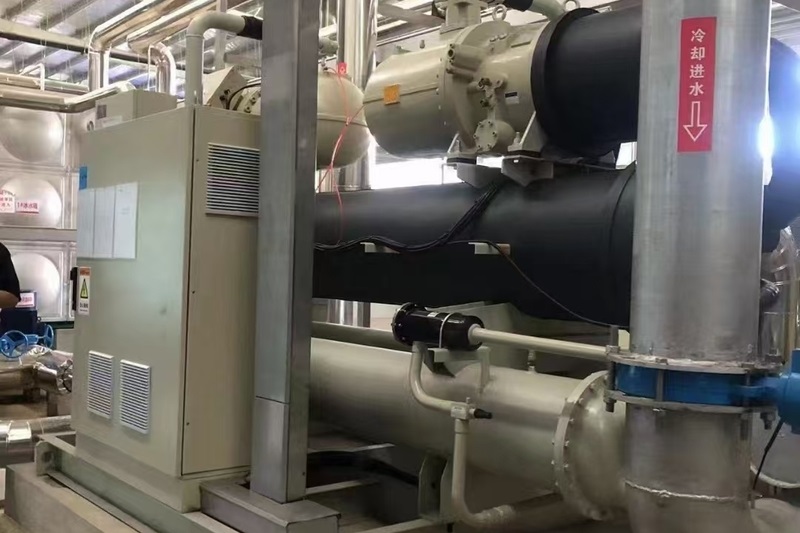
While a water-cooled chiller has a higher standalone Coefficient of Performance (COP), a true comparison must evaluate the entire system. A water-cooled system requires cooling towers, condenser water pumps, and water-treatment systems, all of which consume additional electrical power and require constant maintenance.
The System-Level View
When I review project designs for our B2B clients, I always emphasize the difference between chiller efficiency and system efficiency. It is easy to look at a datasheet and see that our Hanbell or Bitzer water-cooled screw chillers have an exceptional standalone COP. But that is only part of the story.
To make an honest comparison, we must evaluate all the auxiliary components required for both systems. Let us compare these components directly:
| Feature / Auxiliary Component | Air-Cooled Chiller System | Water-Cooled Chiller System |
|---|---|---|
| Primary Heat Exchanger | Finned-tube condenser coils | Shell-and-tube condenser |
| Heat Rejection Method | Condenser fans mounted on the chiller | External cooling tower (fans + fill) |
| Water Pumps Required | Chilled water loop pump only | Chilled water loop pump AND condenser water loop pump |
| Water Consumption | Zero water consumed | Continuous evaporation loss, drift, and blowdown |
| Chemical Treatment | None required | Required to prevent scaling, corrosion, and biological growth |
| Footprint Requirements | Large outdoor footprint | Small indoor chiller footprint, but requires outdoor tower space |
| Maintenance Profile | Simple coil cleaning | Complex tube cleaning, tower maintenance, water testing |
The Auxiliary Power Penalty
In an air-cooled chiller, the fans on top of the unit are the only auxiliary heat rejection load. In a water-cooled setup, you must run several extra pieces of equipment:
- The Cooling Tower Fan: This fan pulls air through the wet tower fill to facilitate evaporation.
- The Condenser Water Pump: This pump circulates water continuously between the chiller's condenser and the outdoor cooling tower.
- Chemical Dosing Pumps: These maintain the water chemistry inside the condenser loop.
If these auxiliary pumps and fans are not designed and sized correctly, they can consume a large portion of the energy savings achieved by the highly efficient compressor. Furthermore, chemical water treatment is absolutely essential. Without it, calcium and other minerals form scale inside the shell-and-tube condenser. A layer of scale just 1mm thick can degrade heat transfer efficiency by more than 20%5 (this specific figure requires verification based on your water quality). This scale buildup quickly ruins the chiller's efficiency and increases your compressor's power draw.
When is water cooling than air cooling the wrong choice for your facility?
Dealing with sudden equipment shutdowns because of scaled-up condenser tubes or local water shortages can completely halt your production line. If your facility lacks a dedicated utility maintenance team, choosing a system that is too complex will lead to constant operational headaches.
Water cooling is often the wrong choice for facilities in arid regions with high water costs, sites with strict environmental regulations on wastewater discharge, or operations that lack the technical staff needed to maintain cooling towers, chemical treatment programs, and water pumps.
Simplicity Often Wins in the Field
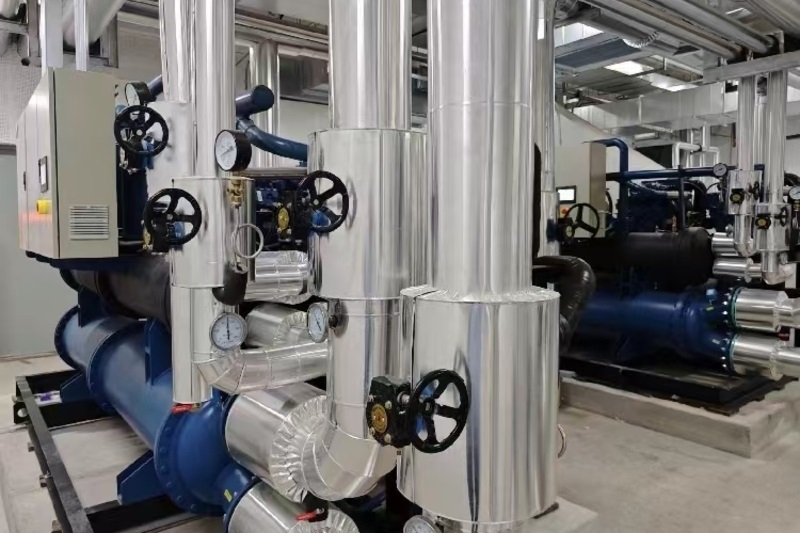
In my experience working with EPC contractors and industrial end users, simpler is often better. Air-cooled chillers are incredibly popular because they are "plug-and-play" systems. At IceStar, we manufacture highly reliable air-cooled scroll and screw chillers that we export to high-temperature regions like the Middle East and Southeast Asia. We optimize these units with oversized condenser coils and premium fans to handle ambient temperatures up to 50°C.
For many operators, the peace of mind of having a system with no water lines to freeze, no cooling towers to clean, and no chemical levels to monitor far outweighs a slight theoretical efficiency advantage.
Key Decision Filters for Your Site
When deciding between these two technologies, you should pass your project through several critical filters:
- Water Availability and Quality: If your plant is in an arid area where water is scarce or expensive, water cooling is rarely viable. A cooling tower loses massive amounts of water to evaporation.
- Maintenance Capabilities: Water-cooled systems require daily or weekly monitoring of water chemistry. If you do not have staff trained to manage this, your system will rapidly lose efficiency and may fail prematurely.
- Space and Installation Constraints: If you have limited indoor space, an air-cooled chiller installed on a roof or outdoor pad is ideal. It eliminates the need for an indoor mechanical room.
- Climate Conditions: In highly humid environments, the wet-bulb temperature is high, which limits the effectiveness of a cooling tower.6 In contrast, very dry climates make cooling towers highly effective but risk high water evaporation rates.
Ultimately, we design and manufacture both systems. For a large chemical plant with an existing water treatment infrastructure, a water-cooled screw chiller is highly effective. For a mid-sized plastics molding facility that needs fast deployment, low maintenance, and quick relocation flexibility, an air-cooled scroll chiller often provides a lower Total Cost of Ownership (TCO).
Frequently Asked Questions
Which chiller type has a longer lifespan?
Typically, water-cooled chillers last longer—often 15 to 20+ years7—because they are installed indoors and protected from harsh outdoor weather. Air-cooled chillers are exposed to rain, sun, wind, and corrosive coastal air, giving them a typical lifespan of 10 to 15 years, though proper maintenance can extend this.
Do water-cooled chillers use a lot of water?
Yes, water-cooled systems continuously lose water through evaporation and drift in the cooling tower. They also require periodic "blowdown" (draining mineral-rich water) to prevent scaling. If water costs are high in your area, this water consumption can significantly impact your monthly operating expenses.
Is an air-cooled chiller easier to install?
Absolutely. Air-cooled chillers are packaged systems. At IceStar, we design them as standardized, integrated units that are factory-tested and ready to run. You only need to connect the chilled water piping and the electrical power, which drastically reduces on-site installation time and labor costs.
How do ambient temperatures affect air-cooled chillers?
Air-cooled chillers lose cooling capacity and efficiency as ambient air temperatures rise. To combat this, IceStar uses premium, internationally branded compressors (like Bitzer, Hanbell, and Danfoss) and oversized condenser coils to ensure stable operations even in extreme ambient temperatures exceeding 45°C.
Conclusion
Choosing between water cooling than air cooling is not about finding a universally superior system. Instead, it is about matching your chiller selection to your local climate, water availability, maintenance resources, and budget. While water-cooled systems can offer outstanding energy savings under the right conditions, air-cooled chillers provide unmatched simplicity, fast installation, and lower maintenance costs.
At IceStar, we leverage over 20 years of manufacturing experience to design custom industrial chillers tailored to your exact needs. Contact our engineering team today to receive a detailed system-level energy analysis and find the perfect, high-reliability cooling solution for your facility.
"Water - the NIST WebBook", https://webbook.nist.gov/cgi/cbook.cgi?ID=C7732185&Mask=2&Type=JANAFL&Plot=on. Thermophysical reference data show that liquid water has a specific heat capacity of roughly 4.18 kJ/kg·K, compared with approximately 1.0 kJ/kg·K for dry air under typical conditions. Evidence role: mechanism; source type: government. Supports: Reference thermophysical-property values showing that liquid water has a specific heat capacity near 4.18 kJ/kg·K and dry air near 1.0 kJ/kg·K under ordinary conditions.. Scope note: Values vary with temperature, pressure, humidity, and the specified air composition. ↩
"Development of a Low-Lift Chiller Controller and Simplified ...", https://www.pnnl.gov/main/publications/external/technical_reports/pnnl-21155.pdf. Refrigeration research and engineering analyses generally find that reducing condensing temperature lowers compression pressure lift and compressor work, thereby improving chiller efficiency at comparable operating conditions. Evidence role: mechanism; source type: research. Supports: Refrigeration-system performance generally improves as condensing temperature and pressure lift decrease, reducing compressor work for a given cooling duty.. Scope note: The magnitude of the reduction depends on refrigerant, compressor type, controls, load, and auxiliary equipment. ↩
"Specific Heat Capacity and Water | U.S. Geological Survey", https://www.usgs.gov/water-science-school/science/specific-heat-capacity-and-water. Standard thermodynamic tables list the constant-pressure specific heat of liquid water near 4.18 J/g·°C and that of dry air near 1.00 J/g·°C over commonly used engineering temperature ranges. Evidence role: statistic; source type: institution. Supports: Published thermodynamic tables provide approximate specific-heat values for liquid water and dry air near the figures quoted.. Scope note: Specific heat is temperature-dependent, and air values also vary with humidity and whether constant-pressure or constant-volume heat capacity is used. ↩
"Water Cooling Tower, Technology, The Air/Water/Heat ...", https://nepis.epa.gov/Exe/ZyPURL.cgi?Dockey=94009C2L.txt. In an evaporative cooling tower, a portion of the circulating water evaporates into the air stream, and the associated latent heat transfer removes heat from the remaining recirculating water. Evidence role: mechanism; source type: education. Supports: Evaporation of a small fraction of recirculating water absorbs latent heat and cools the remaining water in an evaporative cooling tower.. Scope note: Sensible heat transfer to the air also contributes to tower heat rejection; the relative shares depend on atmospheric and operating conditions. ↩
"https://loluoch.digitalscholar.rochester.edu/portf...", https://loluoch.digitalscholar.rochester.edu/portfolio/Heat%20Exchangers%20Van%20Gogh.pdf. Heat-exchanger fouling studies show that mineral scale adds thermal resistance and can materially reduce overall heat-transfer performance; any percentage loss should be tied to the deposit composition, thickness, exchanger design, and flow conditions reported by the source. Evidence role: statistic; source type: paper. Supports: Experimental or modeling literature quantifying the added thermal resistance and heat-transfer deterioration associated with calcium-carbonate or comparable scale deposits in heat exchangers.. Scope note: A universal loss of more than 20% for 1 mm of scale is not established without specifying water chemistry, scale properties, geometry, and operating conditions. ↩
"energy performance - UA", https://ir.ua.edu/bitstreams/4e6e717e-e1cf-4f9b-ba9f-6087732b72ff/download. Cooling-tower performance is referenced to entering-air wet-bulb temperature; higher wet-bulb conditions reduce the available evaporative driving force and tend to raise achievable leaving-water temperature for a given tower and load. Evidence role: mechanism; source type: education. Supports: Cooling-tower capacity and leaving-water temperature are governed by entering-air wet-bulb temperature, which rises as humidity increases at a given dry-bulb condition.. Scope note: Tower performance also depends on airflow, water flow, tower size, approach, and heat load, so humidity alone does not determine capacity. ↩
"Purchasing Energy-Efficient Electric Chillers", https://www.energy.gov/cmei/femp/purchasing-energy-efficient-electric-chillers. Building-equipment lifecycle references commonly report longer expected service-life ranges for water-cooled chillers than for air-cooled units, with water-cooled equipment often estimated in the roughly 15-to-25-year range under appropriate operation and maintenance. Evidence role: statistic; source type: government. Supports: Published building-equipment lifecycle references estimate typical service-life ranges for water-cooled and air-cooled chillers.. Scope note: Service life is an estimate rather than a guarantee and is affected by water treatment, maintenance, operating hours, environment, refrigerant compliance, and major-component replacement. ↩