Buying an industrial chiller for the first time can feel overwhelming. Different suppliers recommend different solutions, quotations vary widely, and it’s difficult to know which proposal truly fits your project.
The good news is that successful projects usually follow the same decision process. Before comparing equipment or negotiating prices, define your process requirements, prepare complete project information, evaluate suppliers based on engineering capability—not just quotations—and compare lifecycle value instead of purchase price alone.
This guide will walk you through that process step by step, helping you make your first industrial chiller purchase with confidence.
Why are quotations from different suppliers so different?
How do I know which type of chiller is right for my factory?
What information should I prepare before requesting quotations?
How can I compare proposals fairly?
How do I avoid choosing the wrong supplier?
If that sounds familiar, you’re not alone.
One thing we’ve learned from industrial cooling projects is that first-time buyers usually don’t make mistakes because they lack technical knowledge. They make mistakes because they don’t know what questions to ask before making a decision.
The purpose of this guide isn’t to teach refrigeration theory.
It’s to help you buy with confidence.
Step 1: Understand Your Project Before Contacting Suppliers
One of the biggest misconceptions is believing that suppliers can recommend the right chiller with only one piece of information:
“We need a 500kW industrial chiller.”
In reality, that’s only part of the picture.
Before contacting any manufacturer, spend a little time gathering your project information. The more complete your information is, the more accurate the recommendations will be.
Project Information Checklist
Information
Why Suppliers Need It
What process is being cooled?
Different applications require different cooling strategies.
Required cooling capacity
Determines preliminary equipment sizing.
Required water temperature
Influences system design and refrigerant selection.
Ambient temperature
Essential for selecting air-cooled systems.
Operating hours
Affects equipment configuration and ROI calculations.
Installation location
Determines installation and maintenance requirements.
Future expansion plans
Helps avoid undersized systems.
Local electrical standards
Ensures compatibility with local power supply.
The goal isn’t to become an engineer overnight.
It’s simply to provide enough information for suppliers to recommend a solution that truly matches your project.
What We Usually See
Some buyers request quotations from ten suppliers using only a cooling capacity.
They receive ten completely different proposals.
The problem isn’t the suppliers.
The problem is that everyone had to make different assumptions.
Expert Tip
The quality of the quotation is directly related to the quality of the information you provide.
A well-prepared RFQ almost always leads to better engineering recommendations.
What does a successful cooling system look like for our factory?
For some companies, success means reducing electricity consumption.
For others, it means maintaining precise process temperatures.
Some projects prioritize low maintenance, while others focus on future production expansion.
Every project has different priorities.
Define Your Buying Priorities
Priority
Why It Matters
Stable production
Prevents costly downtime.
Energy efficiency
Reduces long-term operating costs.
Easy maintenance
Minimizes service interruptions.
Fast delivery
Supports project schedules.
Expandability
Allows future production growth.
Reliable after-sales support
Ensures long-term operational stability.
Having these priorities clearly defined makes it much easier to evaluate competing proposals later.
Expert Tip
Don’t ask suppliers for “their best solution.”
Instead, explain what success looks like for your project. You’ll receive recommendations that are much more relevant to your actual needs.
Step 3: Request Quotations the Right Way
By now, you’re ready to contact suppliers.
This is where many buyers unintentionally make their next mistake.
Instead of sending detailed project information, they simply ask:
“Please quote your best price.”
Unfortunately, that almost guarantees inconsistent quotations.
Every supplier interprets the project differently, resulting in completely different assumptions about equipment configuration, efficiency, controls, and scope of supply.
The more clearly you define your project, the easier it becomes to compare quotations fairly.
What We Usually See
The most successful procurement teams don’t ask for the lowest price first.
They ask for the most suitable technical solution.
Only after confirming the technical proposal do they begin comparing commercial terms.
Step 4: Learn to Compare Proposals—Not Just Prices
Receiving multiple quotations is an important milestone, but it’s also where many first-time buyers make their biggest mistake.
It’s tempting to line up the prices in a spreadsheet and choose the lowest one. Unfortunately, industrial chiller quotations are rarely based on identical assumptions.
One supplier may recommend a premium compressor, while another chooses an economy model. One quotation may include commissioning, training, and spare parts, while another only covers the equipment itself.
Comparing prices without comparing scope is like comparing two cars without knowing what’s under the hood.
Local support, spare parts availability, technical assistance
What We Usually See
Experienced buyers spend less time negotiating price and more time understanding why each supplier recommends a different solution.
Those conversations often reveal which supplier truly understands the project.
Expert Tip
If two quotations have a large price difference, don’t immediately ask, “Why are you more expensive?”
Instead, ask:
“What engineering assumptions make your proposal different?”
The answer often explains far more than the quotation itself.
Step 5: Evaluate the Manufacturer, Not Just the Product
An industrial chiller is expected to operate reliably for many years.
That means you’re choosing more than equipment—you’re choosing the team behind it.
A professional manufacturer should demonstrate more than manufacturing capability. They should also show strong engineering support, quality management, testing procedures, and long-term service commitment.
What Should You Evaluate?
Area
Questions to Ask
Engineering
Can they explain why they selected this solution?
Manufacturing
Do they have organized production and quality control?
Testing
Is every chiller performance-tested before shipment?
Documentation
Are manuals, drawings, and maintenance instructions provided?
Service
How quickly can they provide technical support or spare parts?
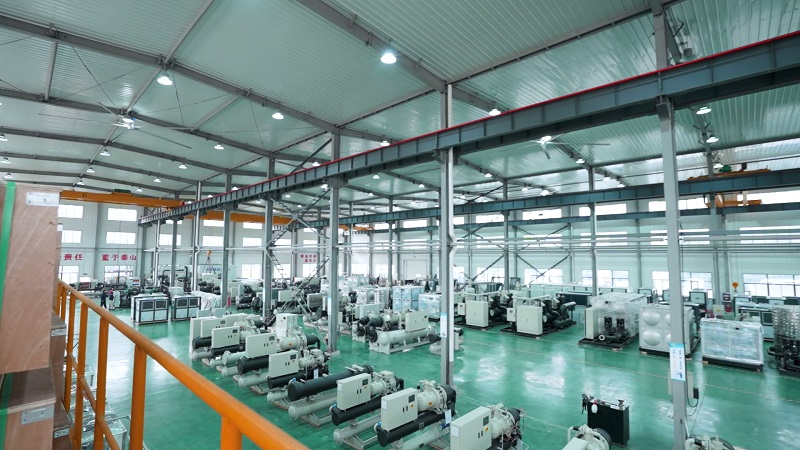
If possible, visit the factory or request a virtual factory tour.
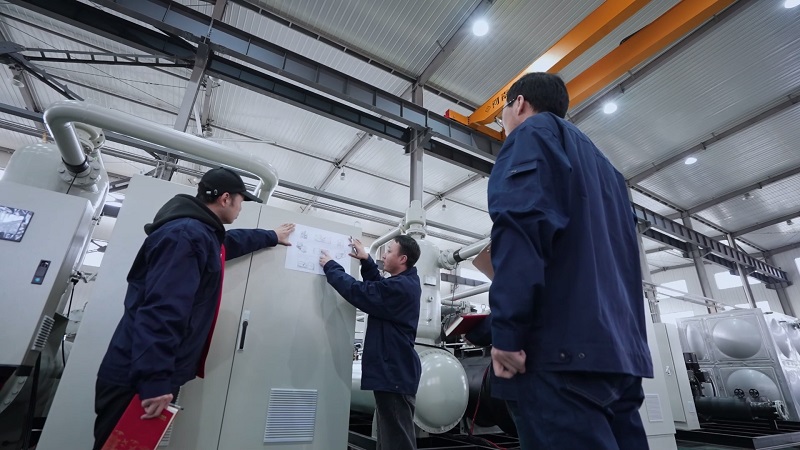
Pay attention to how engineers communicate—not just how salespeople present.
A knowledgeable engineering team should ask thoughtful questions about your application rather than immediately promoting a product.
What We Usually See
The best suppliers don’t rush to send a quotation.
They spend time understanding your production process first.
That extra effort often results in a better long-term solution.
Step 6: Think Beyond Today’s Project
Many first-time buyers focus on solving today’s cooling requirement.
Experienced project managers think one step further.
They ask questions like:
Will production increase over the next five years?
Can this system be expanded?
What happens if one unit requires maintenance?
How will energy costs affect operating expenses?
Will future regulations require different refrigerants?
These questions rarely affect the first day of operation.
But they often determine whether the system remains economical for the next decade.
Think in Terms of Lifecycle Value
Short-Term Thinking
Long-Term Thinking
Lowest purchase price
Lowest lifecycle cost
Today’s production
Future expansion
Equipment only
Complete cooling system
Immediate delivery
Long-term reliability
Initial investment
Return on investment
Industrial chillers are long-term assets.
Choosing a solution that supports your future business can be far more valuable than saving a small percentage on the initial purchase.
Expert Tip
When discussing your project, tell suppliers where you expect your business to be in five years—not just where it is today.
That information can influence equipment sizing, system architecture, and expansion strategy.
Industrial Chiller Buying Checklist
Before placing your order, make sure you’ve confirmed the following:
☐ Cooling capacity has been calculated—not estimated.
☐ Operating temperatures have been clearly defined.
☐ Maximum ambient temperature has been considered.
☐ Electrical specifications match local standards.
☐ The quotation clearly defines the scope of supply.
☐ Major component brands have been confirmed.
☐ Factory testing (FAT) requirements have been agreed upon.
☐ Installation, commissioning, and training responsibilities are clearly defined.
☐ Warranty terms have been reviewed.
☐ Spare parts and after-sales service have been discussed.
Completing this checklist before signing a contract can help avoid many of the misunderstandings that arise later in a project.
Final Thoughts
Buying an industrial chiller for the first time doesn’t have to be complicated.
The most successful projects don’t begin with the lowest quotation—they begin with the clearest understanding of the application.
When you define your requirements, compare proposals carefully, and work with a supplier who understands both engineering and your industry, you’re far more likely to invest in a cooling solution that delivers reliable performance for years to come.
If there’s one takeaway from this guide, it’s this:
A successful industrial chiller purchase is not about finding the cheapest equipment—it’s about making the most informed decision.
Advanced FAQ
1. Should I contact multiple suppliers before defining my project requirements?
Yes. However, you should first prepare key project information. Clear requirements lead to more accurate and comparable proposals.
2. Should I buy directly from a manufacturer or through a distributor?
That depends on your project and local support requirements. Buying directly from an experienced manufacturer often provides better access to engineering expertise, while local distributors may offer faster on-site service.
3. Is the lowest quotation usually the best value?
Not necessarily. Differences in equipment configuration, efficiency, testing, documentation, and after-sales support can significantly affect the true value of a proposal.
4. What documents should I expect before shipment?
Typical documentation includes general arrangement drawings, operation and maintenance manuals, electrical schematics, inspection reports, factory acceptance test (FAT) records, and packing lists.
5. Should I request a Factory Acceptance Test (FAT)?
For medium and large industrial projects, a FAT is highly recommended. It verifies equipment performance before shipment and helps identify potential issues early.
6. What certifications should an industrial chiller supplier have?
Requirements vary by market, but certifications such as ISO 9001, CE, UL (where applicable), and pressure vessel compliance are common indicators of quality management and product compliance.
7. How can I tell if a supplier really understands my application?
A knowledgeable supplier will spend more time asking about your process than promoting equipment. They should explain the engineering rationale behind their recommendations rather than simply presenting a quotation.
8. What is the biggest mistake first-time buyers make?
Focusing only on equipment price. Successful buyers evaluate technical suitability, lifecycle cost, supplier capability, and long-term support before making a decision.
Facebook
Twitter
LinkedIn
WhatsApp
Newsletter
Get free tips and resources right in your inbox, along with 10,000+ others